
Why Cyber Insurance Claims Get Denied, and How to Avoid It
A 70-person company gets hit with ransomware on a Monday. By Wednesday, its cyber insurer has asked for the signed application from last year's renewal, the multi-factor sign-in settings for every server, and the date the company first noticed something was wrong. The claim now depends less on what the attackers did and more on whether those answers line up.
Most growing companies treat cyber insurance as protection they bought once a year. The policy pays only if the company can show, after an incident, that it did what it said it would do and followed the policy's rules during the response. This post covers the most common reasons claims get denied or reduced, what each one looks like at a company with 25 to 200 employees, and what to put in place before you need to file.
The application is part of the contract
Every cyber policy starts with an application or security questionnaire. Someone at the company, often the CEO or CFO, signs it. Those answers become representations the insurer relies on when it prices and issues the policy.
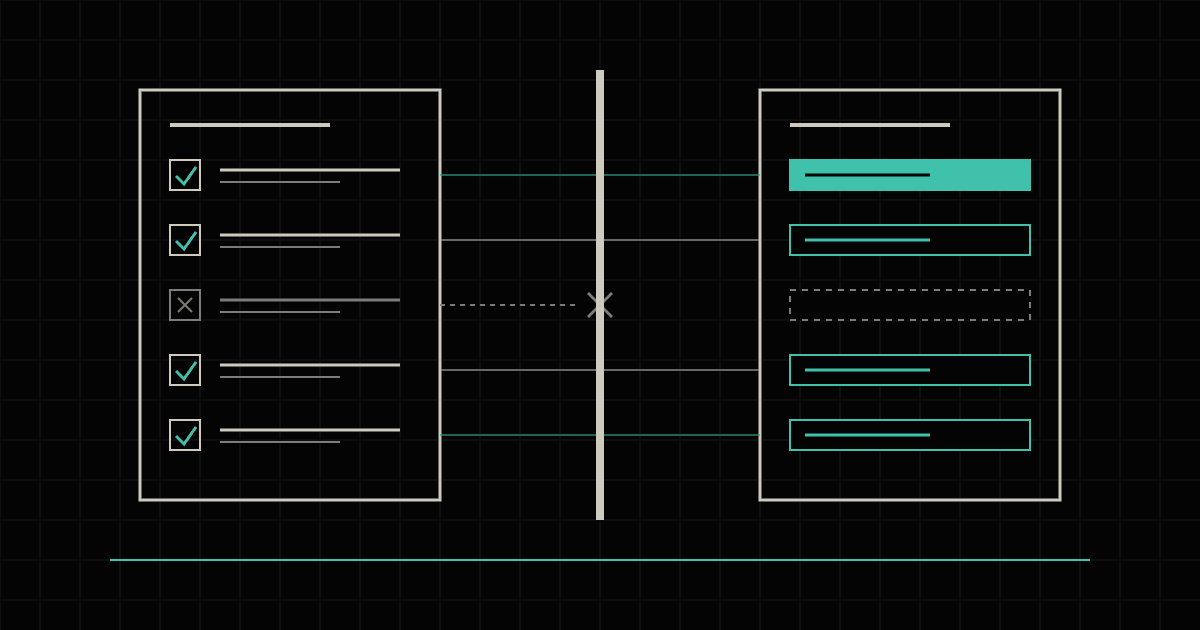
That matters most after a loss. If the answers turn out to be wrong, the insurer can argue the policy should never have been issued. This is not hypothetical. In 2022, after a ransomware attack, Travelers asked a federal court in Illinois to rescind a policy it had issued to a manufacturing company, International Control Services. According to Reed Smith's summary of the case, the application signed by the company's CEO said multi-factor authentication was in place, and Travelers alleged that MFA protected only the firewall, not the servers. The parties agreed to rescission, so the company was left without the coverage it thought it had.
Three points from that case apply to almost any company:
- Intent doesn't have to be bad. Insurers can generally seek rescission for a material misrepresentation even without intent to deceive. A well-meaning answer that turned out to be wrong can still be the problem.
- Partial controls get answered as full controls. "Do you use MFA?" is easy to answer "yes" when email has it and the remote access server doesn't. The question usually means everywhere it matters.
- The signer often isn't the person who knows. Executives sign based on what IT told them, sometimes a year earlier. Controls drift between renewals.
Our earlier post on what underwriters actually check for covers the questions themselves. The claim-side lesson is simpler: every "yes" on the application needs evidence behind it that will still be true on the day of the incident.
Late notice and going it alone during the response
The second group of denials comes from what the company does in the first hours and days of an incident. Cyber policies set conditions for the response, and breaking them can reduce or eliminate coverage even when the incident itself is covered.
Notifying the insurer late. Most policies require notice "as soon as practicable" or within a set window after discovery. Windows vary by policy. A team that spends two weeks quietly investigating before calling the carrier may find the insurer has grounds to reserve its rights or deny. A 2023 Reed Smith review of cyber coverage litigation also notes that late notice under one policy can combine with prior-knowledge provisions in the next policy, leaving a company with no coverage under either.
Hiring vendors without consent. Many policies pay only for incident response firms, lawyers and negotiators from the carrier's approved panel, or require written consent before using anyone else. A company that calls a forensics firm it found online, or lets its IT provider run the investigation alone, may end up paying those bills itself.
Paying or agreeing to costs without approval. Ransom payments, public relations firms and customer notification costs typically require the insurer's prior consent. Settling first and asking later is a common way to lose reimbursement.
Thin documentation. The insurer will ask what happened, when, and what was lost. Without logs, timelines and invoices, a covered loss can still be paid at a fraction of its real cost.
None of these are about security tools. They are about knowing the policy's rules before the incident and having someone whose job it is to follow them during one.
Exclusions and coverage that was never there
Some denials have nothing to do with mistakes. The loss simply falls outside what the policy covers.
Wire and invoice fraud. This is the gap that surprises growing companies most. An employee pays a fake invoice or changes a vendor's bank details after a convincing email. The money left because an authorized person sent it. Many crime and some cyber policies contain a "voluntary parting" exclusion that removes coverage when an employee willingly transfers funds, even if they were deceived. Where social engineering fraud is covered, it is often under a separate, much smaller sublimit than the headline policy limit.
The scale of this risk is real. The FBI's 2024 Internet Crime Report recorded $2.77 billion in business email compromise losses across 21,442 complaints, an average of roughly $129,000 per complaint. Against a small sublimit, a single loss of that size may be only partly covered.
War and state-backed attack exclusions. After the NotPetya attack in 2017, Merck claimed about $1.4 billion in losses under its property policies, and insurers cited a war exclusion. A New Jersey appeals court ruled in 2023 that the exclusion, as written, required military action and did not apply, according to Claims Journal. The case settled in January 2024 on undisclosed terms. Insurers responded by tightening wording. Lloyd's of London required its syndicates to include exclusions for state-backed cyberattacks in standalone cyber policies from March 31, 2023. Most growing companies will never face a nation-state attack directly, but they can be collateral damage in a broad one, and the exclusion wording decides what happens next.
Prior known incidents. Policies generally exclude incidents the company knew about, or should have known about, before coverage started. An unexplained alert that nobody investigated before renewal can become the insurer's argument that the incident predates the policy.
Common denial reasons at a glance
| Denial reason | What it looks like | What prevents it |
|---|---|---|
| Misstated application | MFA claimed but missing on key systems | Verify every answer before signing |
| Late notice | Weeks of internal investigation first | Call the carrier early, scope later |
| Unapproved vendors | Outside forensics firm hired directly | Know the panel before an incident |
| Voluntary parting | Employee wires money to a fraudster | Social engineering coverage, callbacks |
| Prior known incident | Ignored alert before renewal | Investigate and document alerts |
What to put in place before you need to file
Reducing claim risk is mostly about matching what is on paper to what is actually running, and rehearsing the first few hours. A practical sequence for a company of 25 to 200 people:
- Read the current policy for four things. The notice requirement, the vendor panel and consent rules, the social engineering sublimit, and the war or state-backed exclusion. Write each down in one page.
- Re-check every application answer against evidence. For each "yes," identify the setting, report or screenshot that proves it. If a control covers only part of the environment, fix the gap or answer accurately before the application goes back.
- Put the insurer in your incident response plan. The carrier's claims hotline, the policy number and the panel firms belong on the first page, next to the contacts for your IT provider and leadership.
- Close the wire fraud gap on both sides. Require phone callbacks to a known number before any change to payment details, and ask your broker whether social engineering coverage exists and at what limit.
- Keep a running record. Quarterly evidence of MFA coverage, backup tests, patching status and security training means the claim file is mostly built before an incident starts.
- Rehearse it once a year. A short tabletop exercise that includes the "call the insurer" step finds out whether anyone knows who makes that call.
A realistic timeline: steps one and three take a few weeks. Step two depends on what the review finds. Gaps like missing MFA on remote access or backups can often close within 30 to 60 days. Larger projects, such as replacing unsupported servers, can take a quarter or more, which is why starting well before renewal matters.
How managed security and a vCISO close the gaps
Most claim problems come from the space between three groups: the executive who signs the application, the IT provider who runs the systems, and the broker who places the policy. Nobody owns the full picture.
Elevaire Managed Security works alongside your existing IT provider or internal team, not in place of them. It covers the controls insurers ask about, such as multi-factor sign-in and access hardening, email security, backup, device management and security training, and it includes help with the yearly cyber insurance renewal. The quarterly security review keeps the evidence current, so the answers on the next application reflect what is actually running. Our guide on how to answer a cyber insurance questionnaire walks through that process question by question.
For companies that need policy-level decisions, a virtual CISO reviews policy terms with your broker, builds the insurer into the incident response plan and runs the tabletop exercises that test it.
Example engagement: a 90-person distribution company is preparing its renewal application, which asks whether MFA protects remote access, email and backups. Elevaire would check each system, find that the backup console still uses a password alone, enable MFA there before the application is signed, and add the carrier's claims hotline and panel firms to the incident response plan.
Frequently Asked Questions
Why would a cyber insurance claim be denied?
The most common reasons are application answers that don't match the company's actual controls, late notice to the insurer, using vendors or paying costs without the insurer's consent, and losses that fall under an exclusion, such as voluntary parting for wire fraud. Many of these can be prevented by reviewing the policy and verifying application answers before an incident.
Does cyber insurance cover wire fraud or fake invoice payments?
Not always. Many policies exclude losses where an employee willingly sends money, even when they were tricked. Where social engineering fraud is covered, it is often limited to a sublimit much smaller than the main policy limit. Ask your broker directly and get the answer in writing.
How much does it cost to get claim-ready?
Most of the work is reviewing the policy, verifying controls and updating the incident response plan, which a security provider can handle as part of ongoing service. Elevaire Managed Security is offered at predictable monthly pricing with no hourly billing. For context, the FBI's 2024 figures put the average business email compromise loss at roughly $129,000 per complaint, which is the kind of loss a denied claim leaves on your books.
Does Elevaire replace our IT provider or our insurance broker?
No. Elevaire works alongside your existing IT provider or internal IT team, handling the security controls, monitoring and evidence insurers ask about. Your broker still places the policy. Elevaire helps make sure the application answers are accurate and the controls behind them are running.
What should we do first if we have an incident?
Follow your incident response plan, contact your insurer's claims hotline early even before the full scope is known, and use the carrier's approved vendors unless you have written consent to use others. Document what happened and when from the start.
How do we get started?
Pull your current policy and last year's signed application, then compare each answer with what is actually in place today. A free security scorecard or a short risk review can show where the gaps are before your next renewal.
About Elevaire Systems
Elevaire Systems is a managed security services provider for growing companies. We run your security tools and vendors, watch for threats and stop attacks for one predictable monthly price, with virtual CISO leadership and compliance readiness when you need more.
See Where Your Security Stands
Take the free 3-minute scorecard for your top security risks, or book a 30-minute Risk Snapshot to talk it through.